
Tin tức
LVL vs. Plywood: Understanding the Key Differences and Applications
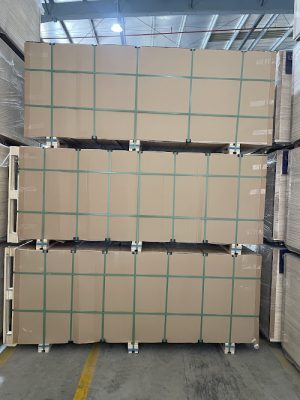
In the engineered wood industry, Laminated Veneer Lumber (LVL) and plywood are two widely used products valued for their versatility, dimensional stability, and efficient use of wood resources. Although both products are manufactured from thin wood veneers, they differ in their structure, performance characteristics, and typical applications.
For importers, distributors, manufacturers, and construction professionals, understanding these differences is essential when selecting the right material for each project.
What Is Laminated Veneer Lumber (LVL)?
Laminated Veneer Lumber, commonly known as LVL, is an engineered wood product manufactured by bonding multiple thin wood veneers together under controlled conditions.
In conventional LVL production, the veneers are generally arranged with their grain directions parallel to the length of the product. This structure provides favorable strength and stiffness along the main axis, making LVL suitable for applications requiring consistent structural performance.
Common applications of LVL include:
- Structural beams and headers
- Door and window components
- Furniture frames and components
- Packaging and industrial applications
- Other engineered wood applications, depending on product specifications
LVL is particularly useful when manufacturers require long, uniform components with predictable mechanical properties.
What Is Plywood?
Plywood is an engineered wood panel made by bonding multiple thin wood veneers together, typically with the grain direction of adjacent layers at right angles to one another.
This cross-laminated structure helps improve dimensional stability and provides strength in both panel directions. Plywood is available in different thicknesses, grades, surface qualities, and bonding specifications to meet a wide range of end-use requirements.
Common applications of plywood include:
- Furniture and interior manufacturing
- Cabinetry and shelving
- Construction and building components
- Packaging and industrial applications
- Decorative and general-purpose panels
The appropriate plywood grade depends on factors such as intended use, bonding performance, surface quality, moisture exposure, and applicable standards.
LVL vs. Plywood: Key Differences
Although LVL and plywood share a veneer-based manufacturing process, their structural designs serve different purposes.
1. Grain Orientation
LVL typically uses veneers with their grain directions aligned along the product’s length. Plywood generally uses alternating veneer grain directions to create a balanced panel structure.
2. Product Form
LVL is commonly supplied in beams, billets, or other elongated forms, depending on the production process and customer requirements. Plywood is generally supplied as flat panels in various dimensions and thicknesses.
3. Mechanical Performance
LVL is designed to provide consistent performance along its principal direction. Plywood offers useful strength and stability across the panel, with performance depending on its construction, veneer quality, adhesive system, and grade.
Actual mechanical properties should always be confirmed through product specifications and relevant test reports.
4. End-Use Applications
LVL is often selected for elongated components and applications requiring directional strength. Plywood is widely used for panel-based applications in furniture, construction, packaging, and interior manufacturing.
Neither product is universally better than the other. The right choice depends on the intended application and technical requirements.
What Should Buyers Consider When Sourcing LVL and Plywood?
When evaluating engineered wood suppliers, international buyers should consider more than the quoted unit price.
Product specifications: Confirm dimensions, thickness tolerances, veneer construction, grade, and surface requirements.
Bonding and quality requirements: Check the applicable bonding classification, adhesive specifications, and test results required for the intended application.
Moisture and end-use conditions: Ensure that the product is suitable for the expected service environment and relevant technical requirements.
Quality consistency: Evaluate the supplier’s quality control procedures, inspection records, and ability to maintain consistent product specifications across orders.
Compliance and documentation: Verify the standards, certifications, and export documents required by the destination market and the specific end use.
Production and shipment planning: Confirm production lead times, packaging requirements, loading arrangements, and shipment schedules before placing an order.
Clear specifications and communication between buyers, suppliers, and manufacturers help reduce quality risks and support more reliable procurement.
Choosing the Right Engineered Wood Solution
LVL and plywood each offer distinct advantages within the engineered wood sector. LVL is commonly used for elongated components requiring directional strength, while plywood provides versatile panel solutions for furniture, construction, packaging, and industrial applications.
Understanding the differences between these materials allows buyers to make better-informed sourcing decisions based on performance, quality requirements, intended use, and total procurement cost.
At United Forest, we work with customers seeking LVL and plywood solutions for international markets. We welcome inquiries from importers, distributors, manufacturers, and business partners interested in discussing product specifications, order requirements, and potential cooperation.
Contact our team to discuss your LVL and plywood sourcing requirements.
